PTFE Thread Seal Tape Grades: Standard, Gas-Rated, High-Density & Industrial
- Share
- Issue Time
- Sep 8,2026
Summary
What do PTFE thread seal tape grades actually mean? Compare standard, high-density, gas-rated and industrial thread seal tape by density, thickness, certification and application before you buy.
PTFE Thread Seal Tape Grades: Standard, Gas-Rated, High-Density & Industrial
What PTFE thread seal tape grades actually mean — density, thickness, gas-rated certification and color codes, matched to water, gas, oxygen and industrial applications.
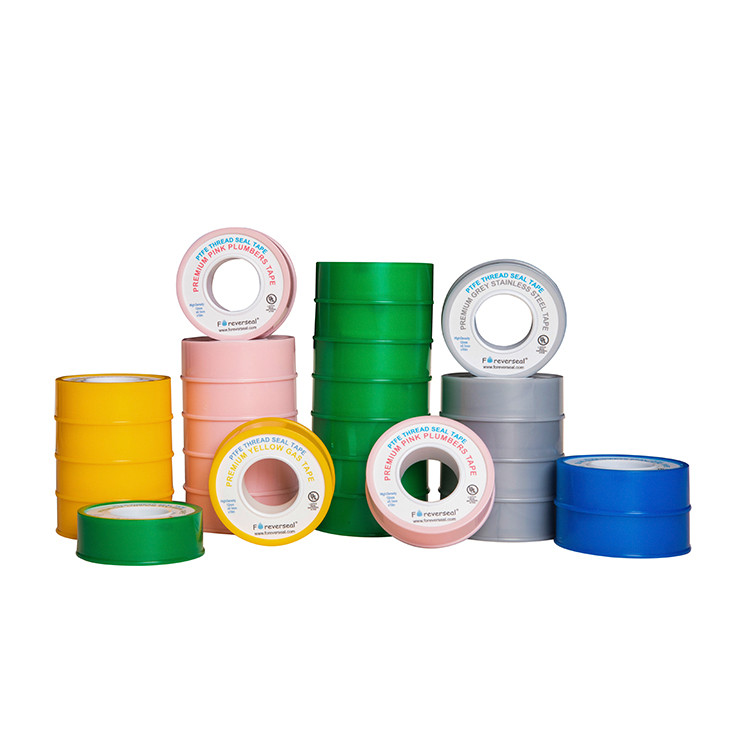
A range of tape formats and packaging colors. Appearance alone does not establish application suitability.
Choose PTFE thread seal tape by its documented application and approvals first, then compare density, thickness and installation instructions. Standard, high-density, gas-rated and industrial are not interchangeable grades on one universal performance ladder. A higher density alone does not establish gas, oxygen or chemical suitability.
Two rolls can look similar yet differ in material mass, dimensions and approved service. Equally, two tapes with similar density can serve very different applications.
For application-specific options, explore the ForeverSeal PTFE thread seal tape range. This guide explains which specifications matter before you choose a roll.
1. What Do PTFE Thread Seal Tape Grades Actually Mean?
The word “grade” can refer to a physical specification, a supplier's product category or a defined standard classification. Buyers should separate these meanings.
| Description | What it tells you | What it does not establish |
|---|---|---|
| Standard / general-purpose | A supplier's general application category | Universal density or suitability for every water and air system |
| High-density | More mass per unit volume than a stated comparator | Gas approval, oxygen compatibility or a universal pressure rating |
| Gas-rated | Suitability claimed for specified gases and conditions | Approval for all gases, thread forms or markets |
| Industrial | Intended equipment or process applications | A single standardized density or unlimited chemical compatibility |
| Extra / ultra-high-density | A supplier-specific physical description | Automatic suitability for extreme pressure or temperature |
Always ask what a grade name means numerically and which document supports its application. Treat “premium” and “heavy-duty” as descriptions until supported by specifications.
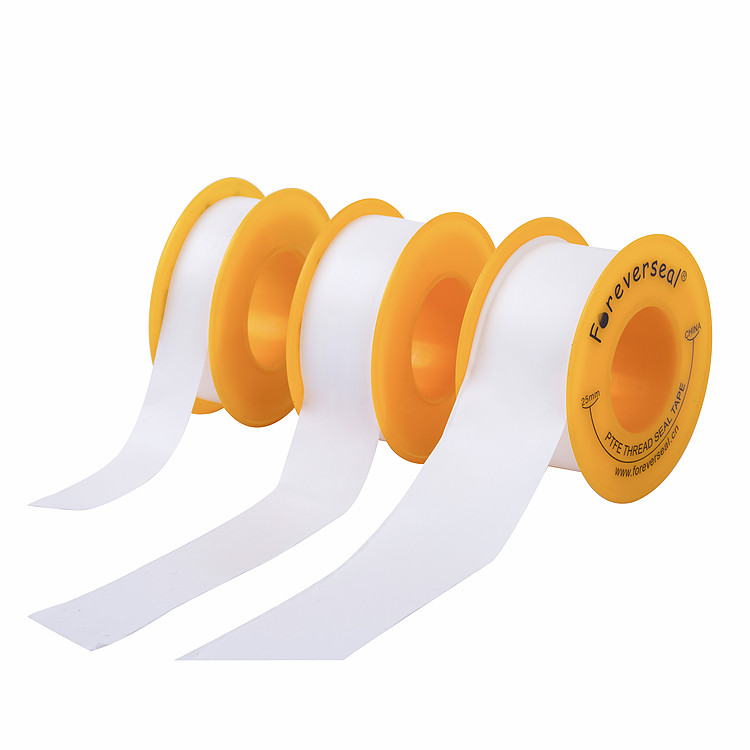
Different tape widths on yellow spools. Yellow packaging does not mean that the tape itself is yellow or gas-approved.
2. Thread Seal Tape Density: An Important Difference Between Grades
Density is mass divided by volume, usually expressed in g/cm³. It helps buyers compare how much material a tape contains at a specified thickness and width.
It is not the only difference between grades. Composition, tolerances, cleanliness, application testing and approvals also matter.
Density and Thickness Are Different Measurements
Thickness tells you how thick the strip is; density tells you how much mass occupies that volume. A thicker tape is not necessarily a denser tape.
A useful purchasing calculation is:
Mass per area (g/m²) = density (g/cm³) × thickness (mm) × 1,000.
The following examples are calculated illustrations, not test results or recommended grades:
| Example | Density | Thickness | Calculated mass per area | Calculated tape mass: 12 mm × 10 m |
|---|---|---|---|---|
| A | 0.4 g/cm³ | 0.10 mm | 40 g/m² | 4.8 g |
| B | 0.8 g/cm³ | 0.10 mm | 80 g/m² | 9.6 g |
| C | 0.4 g/cm³ | 0.20 mm | 80 g/m² | 9.6 g |
At equal thickness, Example B has twice the calculated mass per area of A. Examples B and C have equal mass per area but different thickness and density. These calculations assume uniform dimensions and exclude the spool and packaging.
Twice the material mass does not mean twice the sealing performance or twice the pressure rating. Leakage performance requires application-relevant testing.
3. Standard vs High-Density PTFE Thread Seal Tape: When It Matters
A standard tape may be suitable for an approved routine plumbing application. A high-density PTFE tape may be specified where a particular material loading or installation behavior is required. The correct comparison is between documented products under the intended conditions.
When reviewing a thread sealing tape specification, request nominal density and tolerance, nominal thickness and tolerance, width, roll length and the installation method used in its supporting tests.
For purchasing consistency, compare like with like. Two “12 mm × 10 m” rolls are not necessarily equivalent if thickness and density differ.
Does Denser or Thicker Tape Need Fewer Wraps?
Density and thickness can change material applied per turn, but they do not provide a universal wrap-count conversion. Follow the tape and fitting instructions; do not halve the wraps simply because density doubles.
4. Gas-Rated PTFE Thread Seal Tape: Certification and Color Codes
Gas-rated tape must be suitable for the specific gas and installation conditions. Yellow color is an identification cue, not a certificate.
For natural gas or LPG, verify the exact product, applicable certification or listing, covered dimensions, permitted joint types and operating limits. A statement that a tape is “tested to” a standard is different from an independently issued product approval.
For this application, start with ForeverSeal GasSafe gas-rated thread seal tape, then request current documents covering the model and market you intend to supply.
Yellow Thread Seal Tape vs White Thread Seal Tape: Reading the Grade
White thread seal tape is commonly associated with water and general plumbing; yellow thread seal tape is commonly marketed for fuel-gas applications. Oatey, for example, identifies its yellow product for natural gas, propane and butane, among other listed fluids. That statement applies to its specified product. Source: Oatey yellow gas-line PTFE tape
Pink, green and gray can identify specialty products within a supplier's range. They do not form a universal international grading system. In particular, packaging color and tape color are different things.
If you are searching for “gas rated Teflon tape,” specify PTFE thread seal tape plus the actual gas and approval requirements. Teflon™ is a Chemours trademark; the common search phrase does not identify a grade or certify a product. Source: Chemours trademark guidance
5. Matching Thread Seal Tape Grade to Your Application
Water and Potable-Water Systems
Confirm potable-water suitability where required, along with fitting compatibility and service conditions. A fuel-gas approval does not substitute for drinking-water documentation.
Review ForeverSeal Aqua PTFE thread seal tape for water systems and request the approval scope for the exact model.
Natural Gas and LPG
Use a tape specifically documented for the fuel gas, joint and destination market. Do not choose an oxygen product simply because its name includes “gas” or its density appears higher.
Oxygen and High-Purity Gases
Oxygen service is a separate selection problem involving compatibility and cleanliness. “Oil-free” or “high-density” alone is not sufficient evidence.
The current ForeverSeal UltraGas PTFE tape for oxygen and specialty gases page positions this range separately from GasSafe. Request application-specific documentation, permitted operating conditions and handling requirements before selection.
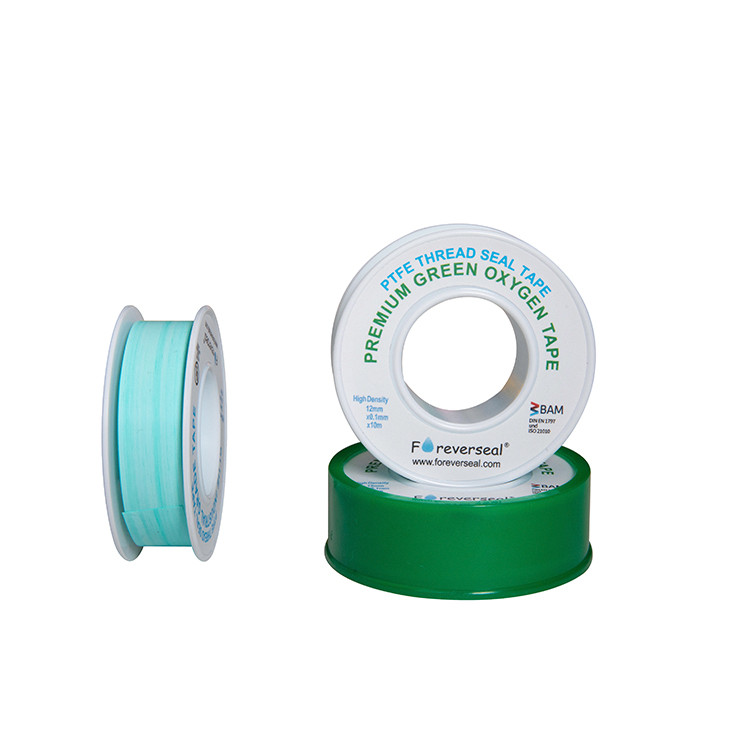
Oxygen-service product reference. Verify the exact model and current service documentation; the photograph is not independent certification evidence.
Industrial Equipment, Oil and Chemical Lines
Identify the actual fluid, concentration, temperature, pressure and connection design. “Industrial grade” does not establish compatibility with every oil, refrigerant or chemical.
Discuss ForeverSeal Industrial PTFE thread seal tape against the equipment specification. For aggressive chemicals, ask for a dedicated compatibility review rather than upgrading density by assumption.
6. PTFE Thread Seal Tape Selection Table for Water, Gas and Chemical Lines
| Application | First selection criterion | Then compare | Avoid assuming |
|---|---|---|---|
| Potable water | Applicable drinking-water suitability | Dimensions, density and fitting instructions | Every white tape is approved |
| Natural gas / LPG | Specific fuel-gas suitability and required approval | Approved size range and operating conditions | Yellow color proves certification |
| Compressed air | Equipment and connection requirements | Pressure-temperature limits and contamination concerns | All industrial tapes are interchangeable |
| Oxygen / high-purity gas | Service-specific compatibility and cleanliness evidence | Permitted conditions and handling | Fuel-gas tape is an oxygen substitute |
| Oil / chemicals | Compatibility with the identified medium | Concentration, temperature and joint design | More density makes PTFE universally compatible |
| Extreme service | Engineering review of the complete joint | Tested operating envelope | An “ultra” label proves extreme-service capability |
Before specifying tape, establish that the joint actually seals at its threads. Flare seats, ferrules, washers and O-rings use different sealing mechanisms.
7. Compare ForeverSeal Thread Seal Tape Grades Side by Side
Use the ranges below as application starting points rather than a lowest-to-highest ranking.
| Range | Current application positioning | What to request before purchase |
|---|---|---|
| Aqua | Water and plumbing systems | Potable-water documents, model-specific dimensions and installation instructions |
| GasSafe | Natural gas and LPG | Relevant gas approval, covered models and operating limits |
| UltraGas | Oxygen and specialty gases | Oxygen-service evidence, cleanliness and permitted conditions |
| Industrial | Equipment and process requirements | Current TDS and confirmation against the actual medium and equipment |
Product-page descriptions are manufacturer information; independent certification scope must be checked against current supporting documents. Density values should be taken from the agreed model-specific TDS rather than inferred from this table.
8. ForeverSeal Certification: Check the Model and Application
Certificates make selection more precise when their conditions stay attached to the covered product.
| Evidence | Covered reference | Practical selection point |
|---|---|---|
| WRAS 2212523 | DF201 white PTFE tape | Water contact up to 85°C; water-quality scope, not a mechanical pressure rating. Letter states validity through December 2027. |
| DVGW NG-5143DP0202 / 0203 | 60 g/m² Class F, DN ≤10 / 100 g/m² Class G, DN ≤50 | Annexes distinguish gas installations at 5 bar, appliances at 0.2 bar, specified LPG storage at 20 bar and hot water at 7 bar. Gas: −20°C to +125°C; hot water: up to +125°C. Certificates state expiry 10 April 2029. |
| AGA 9389 | Class III tape, FS12 / FS19 / FS25 | AS 4623-2008; stated working pressure 2,000 kPa and temperature −20°C to +250°C. |
These references describe different models and assessment scopes. Do not combine their limits, infer oxygen suitability, or assign them to a sales range without confirming the exact SKU. The supplied copies were reviewed on 16 November 2026; current listing status remains to be checked for procurement.
Request complete documents and model matching through ForeverSeal thread seal tape certification support.
9. FAQs About PTFE Thread Seal Tape Grades
Is high-density PTFE tape always better?
No. It contains more mass per unit volume than a lower-density comparator, but suitability depends on application, dimensions, approvals and installation. Density is not a standalone performance rating.
Can white thread seal tape be used for gas?
Only when the exact product is explicitly suitable and permitted for that gas application. Color alone cannot answer the question.
Is yellow thread seal tape suitable for oxygen?
Do not assume so. Fuel-gas suitability does not establish oxygen compatibility or cleanliness. Select a product with documentation for the actual oxygen-service conditions.
Is industrial tape a standardized grade?
The label alone is not a complete specification. Ask for numerical properties, tolerances and evidence supporting the intended application.
Does thicker tape mean higher pressure resistance?
Not by itself. Pressure suitability depends on the product, fitting, assembly and temperature. Thickness alone cannot establish the complete joint's pressure rating.
How should I compare supplier quotations?
Compare the same width, length, thickness, density, tolerances, approval scope and packaging. Separate tape mass from gross spool weight, and check that quotations refer to the same intended service.
10. Get the Right PTFE Thread Seal Tape Specification from ForeverSeal
Tell us your medium, thread standard and size, fitting material, operating temperature and pressure, destination market and required approvals. Add your quantity, preferred roll dimensions and packaging requirements so we can discuss a suitable specification.
Whether you need water-system tape, fuel-gas grades or a specialty-service review, start with the application and build the specification around it.